
How to identify door hinge types
How to identify door hinge types
To identify door hinge types, start by examining where the hinge sits on the door and how it attaches. Notice the shape, movement, and any visible features. Use a coin to check the corners. These steps help you spot differences and select the correct hinge for your project.
Identify door hinge types
Check hinge location and mounting
The first step in identifying door hinge types is to examine where the hinge is placed and how it is mounted. Proper hinge placement ensures smooth door operation and extends the life of the door. Most doors use hinges installed about 7 inches from the top and 11 inches from the bottom. Heavier doors may require more hinges to support their weight. Always space hinges equally to keep the door aligned and prevent rubbing against the frame.
Use a tape measure to check hinge positions.
Mark hinge locations with a pencil for accuracy.
Cut hinge mortises with a chisel for a snug fit.
The mounting position can also reveal the hinge type. Face frame cabinets need special mounting plates because of the solid frame around the opening. Frameless cabinets use concealed hinges that attach directly to the cabinet side. The mounting plate height determines how much the door overlays the cabinet.
Tip: Correct hinge placement helps avoid common installation mistakes and keeps the door working smoothly.
Observe shape and movement
Shape and movement patterns are key clues when identifying door hinge types. Each type has a unique design and way of moving. The table below shows common hinge shapes and how they operate:
Hinge Type | Shape Description | Movement Pattern |
|---|---|---|
Strap Hinges | Long, decorative leaves extending across the door | Supports heavy doors |
T Hinges | T-shaped design with one leaf on the door | Easy installation, decorative appeal |
Lift-Off Door Hinges | Allows door to be lifted off without unscrewing | Quick removal and reinstallation |
Self-Closing Door Hinges | Built-in spring mechanism for automatic closure | Closes door after opening |
Ball-Bearing Door Hinges | Designed to reduce friction with ball bearings | Smooth operation and durability |
When you open and close the door, watch how the hinge moves. Some hinges, like self-closing types, use springs to pull the door shut automatically. Ball-bearing hinges offer smooth movement and last longer, especially on heavy or frequently used doors.
Look for visible features (leaf, pin, knuckle)
Examining the visible parts of a hinge helps you distinguish between door hinge types. Butt hinges are the most common for swinging doors. They have two rectangular plates called leaves, joined by a pin through knuckles in the middle. Butt hinges come in different sizes, weights, and materials to match various door needs. Some butt hinges include special bearings for doors that are tall, wide, thick, or heavy, and for doors that get used often.
Butt hinges have two rectangular leaves and a central pin.
Knuckles are the rounded sections where the pin sits.
Hinges may have different bearings for durability.
The pin is another important feature. Some hinges have removable pins, which make it easy to take the door off. Security-grade hinges use non-removable pins to prevent tampering when the door is closed. This feature sets them apart from standard hinges.
Note: Always match the hinge to the door’s weight and how often it will be used. Heavy doors and high-traffic areas need stronger, more durable hinges.
Use the coin test for hinge corners
The coin test is a simple way to check the corner radius of residential door hinges. Place a dime or a quarter against the hinge corner to see which matches best. Most hinges have either a 1/4″ or 5/8″ radius.
Coin Used | Radius Matched |
|---|---|
Dime | 1/4″ radius |
Quarter | 5/8″ radius |
This test helps you identify the hinge type and find a replacement that fits perfectly. If the coin matches the corner, you know the radius and can choose the right hinge for your door.
Tip: Always consider the door’s weight and how often it is used when selecting door hinge types. Heavier and frequently used doors need hinges designed for durability and smooth operation.
Types of door hinge types
Butt hinges
Butt hinges are one of the most common door hinge types found in homes and businesses. They consist of two rectangular plates, called leaves, joined by a central pin. These hinges support the weight of both lightweight interior doors and heavy exterior entryways. Butt hinges come in many designs, materials, and finishes, which makes them suitable for different environments and styles. High-quality butt hinges ensure smooth operation and reduce the need for maintenance.
Feature | Benefit |
|---|---|
Reliability | Ensures consistent door performance |
Versatility | Compatible with various door types |
Weight Support | Prevents sagging or misalignment |
Common materials for butt hinges include:
Steel: Strong and affordable, often coated to prevent rust.
Stainless steel: Resists corrosion, ideal for outdoor use.
Brass: Attractive and has anti-microbial properties.
Bronze: Durable with a unique patina, used in rustic settings.
Aluminum: Lightweight and corrosion-resistant.
Zinc: Used as a coating for extra protection.
Plastic and nylon: Lightweight, used in special environments.
Iron: Traditional look, very strong but needs treatment to avoid rust.
Note: Butt hinges are essential for the functionality of most doors, providing strength and reliability in both residential and commercial settings.
Continuous/piano hinges
Continuous hinges, also known as piano hinges, run the full length of the door or lid. This design provides even support and stability, which is important for heavy or high-traffic doors. These hinges were first used on piano lids, but now they are found in many places, such as industrial enclosures, cabinets, toolboxes, and marine applications.
Feature/Application | Description |
|---|---|
Full-Length Support | Distributes weight evenly along the door or lid |
Customization | Can be made in different lengths, hole patterns, and finishes |
Durability | Suitable for heavy-duty and high-traffic environments |
Material Options | Available in steel, stainless steel, brass, and plastics |
Modern Variants | Includes geared and concealed continuous hinges |
Security and Compliance | Some models offer tamper resistance and fire rating |
Continuous hinges are chosen for their strength and ability to prevent doors from sagging over time. They are also easy to customize for special projects.
Concealed/Euro hinges
Concealed hinges, also called Euro hinges, are hidden from view when the cabinet door is closed. This creates a clean, modern look in kitchens, bathrooms, and offices. These hinges use a cup mounting plate that fits into a pre-drilled hole in the door, making installation quick and simple. Adjustments can be made after installation with a screwdriver, which helps align the door perfectly.
Concealed hinges are not visible from the outside, giving cabinets a smooth appearance.
The cup mounting plate allows for easy and accurate installation.
Fine-tuning is possible after mounting, so doors can be adjusted for a perfect fit.
These hinges are popular in modern cabinetry and are also used for bifold doors and glass doors with narrow frames.
Pivot hinges
Pivot hinges allow a door to rotate on a central point at the top and bottom, instead of swinging on the side. This hinge type is often used for large or heavy doors, such as grand entrances or room dividers. Pivot hinges create a minimalist look because they are less visible than traditional hinges.
Central pivot hinge lets the door swing smoothly on its axis.
Suitable for large panels and heavy doors.
Offers design flexibility and a clean, modern appearance.
Commonly used for entry doors, patio doors, and interior room dividers.
Hinge Type | Average Weight Capacity | Heavy-Duty Capacity |
|---|---|---|
Pivot Hinges | 700 pounds | Over 1,000 pounds |
Traditional Hinges | Varies (lower) | N/A |
Pivot hinges support more weight than most other door hinge types, making them ideal for special architectural features.
Spring hinges
TDC Spring hinges have a built-in spring mechanism that closes the door automatically after it is opened. These hinges are often used in commercial buildings, offices, and kitchens where doors need to close by themselves for safety or energy efficiency.
Characteristic/Application | Description |
|---|---|
Automatic Door Closure | Closes doors automatically, improving security and privacy |
Minimal Maintenance | Requires little upkeep |
Safety and Energy | Helps maintain indoor temperature and fire safety |
ADA Compliance | Can be used to meet accessibility standards |
Fire Safety | Suitable for fire-rated doors |
Spring hinges eliminate the need for manual closing, which is helpful when carrying items.
They help prevent unauthorized access and keep doors closed in climate-controlled spaces.
These hinges are required in some areas for fire safety and emergency regulations.
T-hinges
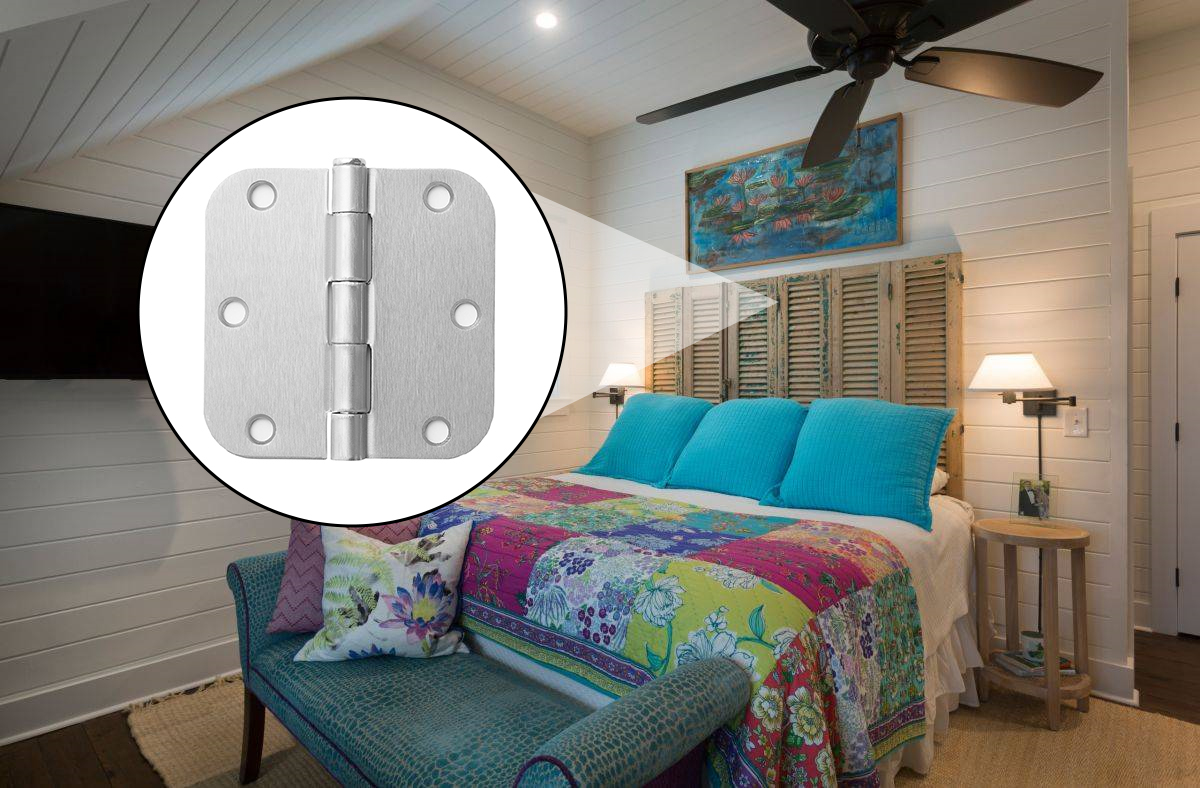
T-hinges get their name from their shape, which looks like the letter "T." One leaf attaches to the door frame, and the other leaf attaches to the door. T-hinges are strong and easy to install, making them a popular choice for barn doors, garden gates, and sheds.
Feature/Use | Description |
|---|---|
Heavy-Duty Load Support | Extended strap leaf adds strength for heavy doors and gates |
Broad Usage Applications | Used on barns, sheds, gates, and rustic cabinetry |
Durable Materials | Made from steel, stainless steel, brass, or bronze |
Rustic Aesthetic | Offers vintage charm and long-lasting performance |
Easy Surface Mounting | Simple to install on most surfaces |
T-hinges are valued for their durability and classic appearance. They work well in outdoor and rustic settings.
Specialty hinges
Specialty hinges are designed for unique needs that standard door hinge types cannot meet. These hinges include:
Concealed hinges for frameless cabinets and high-end furniture.
Strap hinges for barn doors and outdoor gates.
Marine hinges for boats and wet environments.
Lid support hinges for toolboxes and chests.
Wide throw hinges for doors that need to open a full 180 degrees.
Torque hinges for applications that require resistance to motion.
Lift-off hinges for doors that need to be removed temporarily.
Hinge Type | Common Uses |
|---|---|
Marine Hinges | Storage hatches, galley cupboards, bait wells |
Lid Support Hinges | Tool boxes, chests, cabinets with swinging doors |
Wide Throw Hinges | Doors needing 180-degree swing |
Continuous Geared Hinges | Doors needing gear teeth for support |
Lift Off Hinges | Temporary door removal |
Specialty hinges address specific requirements, such as extra load-bearing capacity, special movement, or environmental resistance. They enhance the function and durability of doors and cabinets in challenging or unique situations.
Tip: When choosing among door hinge types, always consider the door’s size, weight, and how the door will be used.
Quick reference and troubleshooting
Comparison chart of hinge types
Choosing the right hinge depends on several important factors. The table below compares common hinge types based on load capacity, range of motion, durability, appearance, installation, and cost. This quick reference helps you match the hinge to your door’s needs.
Hinge Type | Load Capacity | Range of Motion | Durability | Aesthetic Appeal | Installation & Maintenance | Cost |
|---|---|---|---|---|---|---|
Butt | Medium-High | 90°-180° | High (steel/brass) | Visible, classic | Moderate | $ |
Continuous | High | 180° | Very High | Visible, industrial | Easy | $$ |
Concealed/Euro | Medium | 110°-165° | High | Hidden, modern | Precise, adjustable | $ |
Pivot | Very High | 90°-360° | High | Minimal, sleek | Requires skill | $$ |
Spring | Medium | 90°-180° | High | Visible, functional | Moderate | $ |
T-Hinge | High | 90°-180° | High (outdoor use) | Decorative, rustic | Easy | $ |
Specialty | Varies | Varies | Varies | Varies | Varies | $-$$ |
Tip: Always check the door’s weight and how far you want it to open before choosing a hinge.
What to do with unusual hinges
Sometimes, you may find a hinge that does not match common types. Here are steps to help:
Take clear photos of the hinge from different angles.
Measure the hinge’s length, width, and thickness.
Look for any brand names, numbers, or markings.
Compare the hinge to online catalogs or hardware store samples.
Ask a hardware specialist for advice if you cannot identify it.
Note: Unusual hinges often appear on older doors, custom furniture, or imported cabinets. Replacement parts may need to be special ordered.
If you cannot find an exact match, consider using an adapter plate or retrofitting a standard hinge. Always test the fit before final installation to ensure smooth operation.
Identifying door hinge types involves checking location, shape, and features. Most hinges fit into a few main categories. Consider door weight and frequency of use. High traffic doors need durable hinges, and ball bearings improve movement. Choose hinges that match your style. Security features like non-removable pins and tamper-resistant screws add protection.
Hinge Model | Load Capacity |
|---|---|
TECTUS TE 640 3D | 440 lbs |
AGB Minimal Plus XT | N/A |
OTLAV INVISACTA IN300 | N/A |
FAQ
How do I know if my hinge is left-handed or right-handed?
Open the door toward you. If the hinges are on your left, it is left-handed. If on your right, it is right-handed.
Can I replace a standard hinge with a concealed hinge?
Usually, you cannot swap them directly. Concealed hinges need special mounting holes and plates. Check your door and cabinet style before replacing.
What tools do I need to measure or identify a hinge?
A tape measure, a coin for corner radius, and a screwdriver help with most hinge identification tasks. A camera can help document unusual hinges.
Related articles
-
Top Tips for Choosing White Door Hinges for a Stylish Home
White door hinges offer a clean, modern look and versatile style while providing durable, low-maintenance hardware for any home decor.Jan-20-2026 Learn More >> -
Everything You Need to Know About Hinges on Doors
Find out how to choose the best hinges on door for smooth operation, security, and style. Get tips on hinge types, sizing, and materials for any door.Jan-20-2026 Learn More >> -
A Complete Guide to Hinge Types for Modern Projects
Hinge types offer unique benefits for doors, cabinets, and gates. Compare features, materials, and uses to select the best hinge for your modern project.Jan-20-2026 Learn More >>

Contact
Tel: +8613325838282
Add: 12819 Telegraph Road Santa Fe Springs, CA 90670
Follow Us:


