
How to Choose the Right Door Hinge Size
How to Choose the Right Door Hinge Size
Selecting the right door hinge sizes keeps your door working smoothly and prevents sagging. Matching hinge size to the door's thickness, height, and weight increases stability and extends the life of the door. Large or heavy doors need bigger, stronger hinges for proper support. Too few hinges can cause misalignment and make the door hard to use.
Key Factors for Choosing Hinges
Door Thickness and Weight
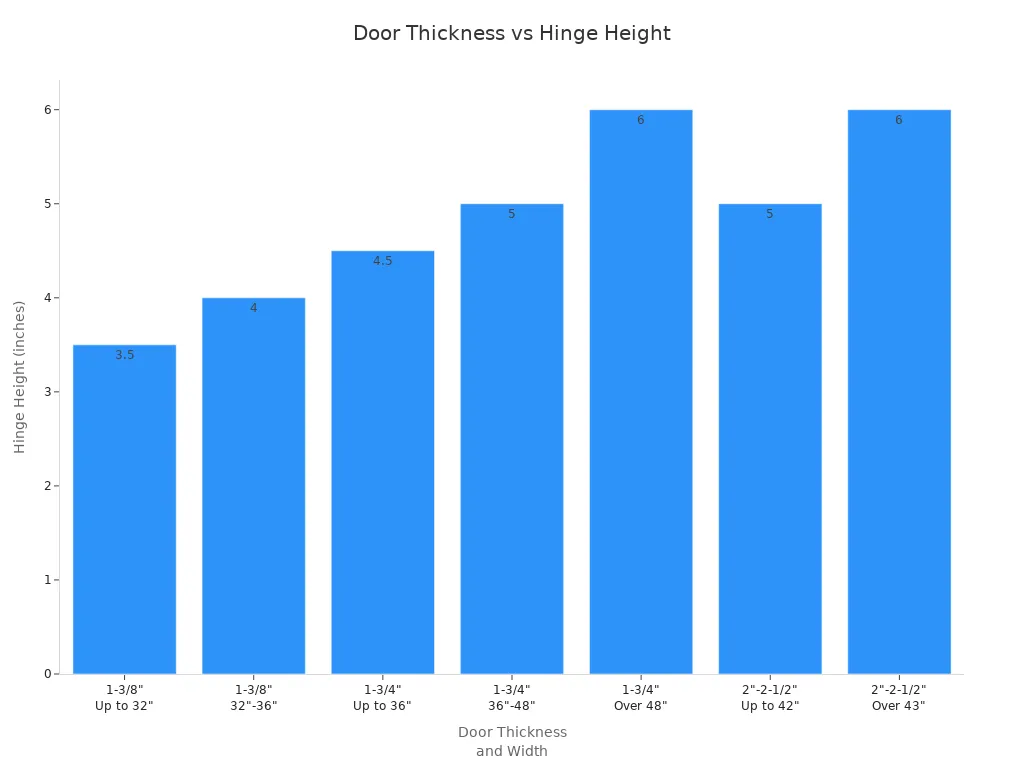
Choosing the right door hinge sizes starts with understanding the thickness and weight of your door. Thicker and heavier doors need larger, stronger hinges to prevent sagging and ensure smooth movement. The hinge width should be just under twice the thickness of the door. For example, a door that is 1-3/8 inches thick and up to 32 inches wide usually works best with a 3-1/2 inch hinge. Heavier doors, such as those made from solid wood, may require ball-bearing or heavyweight hinges for extra support.
Door thickness | Door width | Approximate hinge height |
|---|---|---|
1-3/8" | Up to 32" | 3-1/2" |
1-3/8" | 32"-36" | 4" |
1-3/4" | Up to 36" | 4-1/2" |
1-3/4" | 36"-48" | 5" |
1-3/4" | Over 48" | 6" |
2", 2-1/4", 2-1/2" | Up to 42" | 5" (commercial duty) |
2", 2-1/4", 2-1/2" | Over 43" | 6" (commercial duty) |
Tip: Always check the material of the hinge. Stainless steel and aluminum hinges offer better durability, especially for exterior doors.
Door Height
Door height also affects the number and size of hinges needed. Taller doors put more stress on hinges, so more support is necessary. A good rule is to use one hinge for every 30 inches of door height. For example, doors up to 60 inches tall need two hinges, while doors between 60 and 90 inches tall require three. Very tall doors, such as those over 90 inches, may need four or more hinges to distribute the weight evenly.
Door Type
Different door types require different hinge choices.TDC Interior doors often use standard door hinge sizes, while exterior doors need stronger, corrosion-resistant hinges like stainless steel or aluminum. Cabinet doors are lighter and usually need smaller, concealed hinges. The table below shows typical recommendations:
Door Type | Height Range | Recommended Hinges | Notes |
|---|---|---|---|
Interior Door | Up to 60 inches | 2 hinges | Reduces stress on contact points. |
60 to 90 inches | 3 hinges | Check local building codes. | |
Cabinet Door | Under 24 inches | 1 concealed hinge | For small cabinet doors. |
24 to 36 inches | 2 hinges | For medium-sized cabinet doors. | |
Exterior Door | Any | 3+ heavy-duty | Use corrosion-resistant materials. |
Selecting the correct door hinge sizes for your specific door type ensures safety, durability, and smooth operation.
Measuring Door and Hinges
Measuring Door Thickness
Accurate measurement of door thickness is the first step in selecting the right hinge. Use calipers for the most precise results. A measuring tape works well for general measurements. Place the tool at the thickest part of the door and record the number. Always double-check your measurement to avoid mistakes. Knowing the exact thickness helps you match the correct door hinge sizes for your project.
Tip: Write down your measurements before shopping for hinges. This prevents confusion later.
Measuring Hinge Size and Shape
Hinge size and shape must fit both the door and the frame. Follow these steps to measure:
Identify if your cabinet or door uses a face frame or is frameless.
Measure the overlay by checking the distance from the cabinet frame to the outer edge of the door.
Check the cup diameter and depth if you are replacing concealed hinges.
Review hinge boring options, as these depend on the hinge type and overlay.
Measure the distance between screw holes from center to center.
For face frame hinges, note the spacing for proper placement.
These steps ensure the new hinges will fit and function correctly.
Measuring Hinge Placement
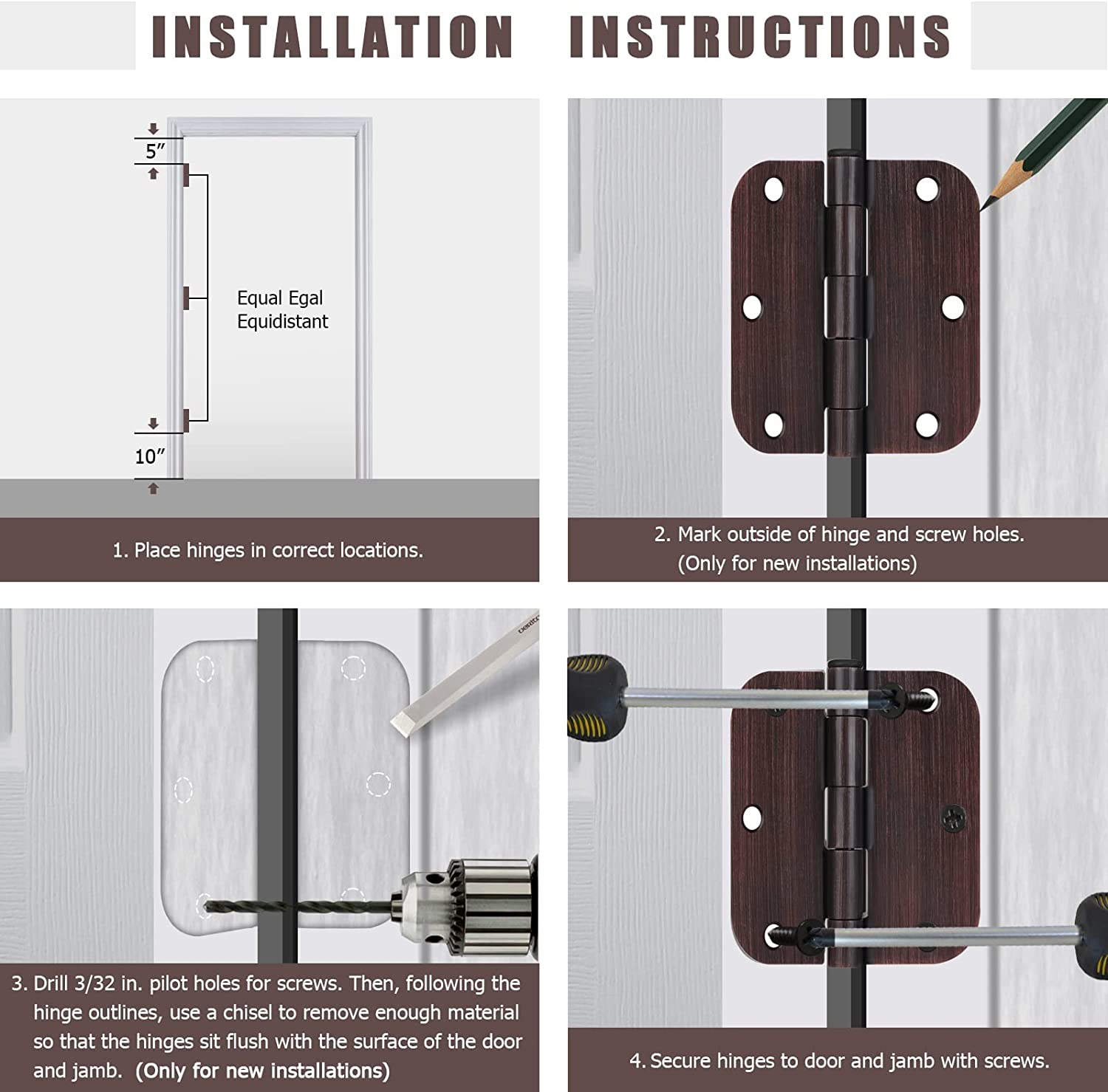
Proper hinge placement keeps the door stable and prevents sagging. Most residential doors follow a standard:
Place the top hinge 5 to 7 inches from the top edge of the door.
Position the bottom hinge 10 to 11 inches from the bottom edge.
If a third hinge is needed, center it between the top and bottom hinges.
Correct placement supports the door’s weight and extends the life of your hinges.
Understanding Door Hinge Sizes
Standard Door Hinge Sizes
Standard door hinge sizes help homeowners and builders choose the right hardware for most doors. These sizes fit common interior and exterior doors found in homes. The most popular sizes include 3.5 inches by 3.5 inches for interior doors and 4 inches by 4 inches or 4.5 inches by 4.5 inches for entry doors. These measurements refer to the height and width of the hinge when it is open and flat.
Here is a table showing the most common standard hinge sizes used in residential construction:
Door Type | Hinge Size | Door Thickness | Use Frequency |
|---|---|---|---|
Residential Interior Door | 3.5" x 3.5" | 1-3/8" | Low |
Residential Entry Door | 4" x 4" or 4.5" x 4.5" | 1-3/4" | High |
Most interior doors use smaller hinges because they are lighter and thinner. Exterior doors need larger, stronger hinges to support extra weight and provide security.
Note: Always check the existing hinge size before buying replacements. This ensures a proper fit and smooth operation.
Matching Size to Door Thickness
Choosing the correct hinge size depends on the thickness and width of the door. Thicker and wider doors need larger hinges for proper support. The table below shows how standard hinge sizes match typical door thicknesses and widths:
Door Thickness | Door Width | Approximate Hinge Height |
|---|---|---|
1-3/8" | Up to 32" | 3-1/2" |
1-3/8" | 32"-36" | 4" |
1-3/4" | Up to 36" | 4-1/2" |
1-3/4" | 36"-48" | 5" |
1-3/4" | Over 48" | 6" |
2", 2-1/4", 2-1/2" | Up to 42" | 5" (commercial duty) |
2", 2-1/4", 2-1/2" | Over 43" | 6" (commercial duty) |
The hinge thickness, also called the gauge, plays a key role in supporting the door. Thicker hinges are stronger and can hold heavier doors. The overall size of the hinge must match the door’s height, weight, and thickness. For example, a heavy entry door with a thickness of 1-3/4 inches often needs a 4.5-inch hinge with a thicker gauge for extra strength.
Tip: If you are unsure, choose a hinge that is slightly larger and thicker. This adds support and helps prevent sagging over time.
Specialty and Commercial Sizes
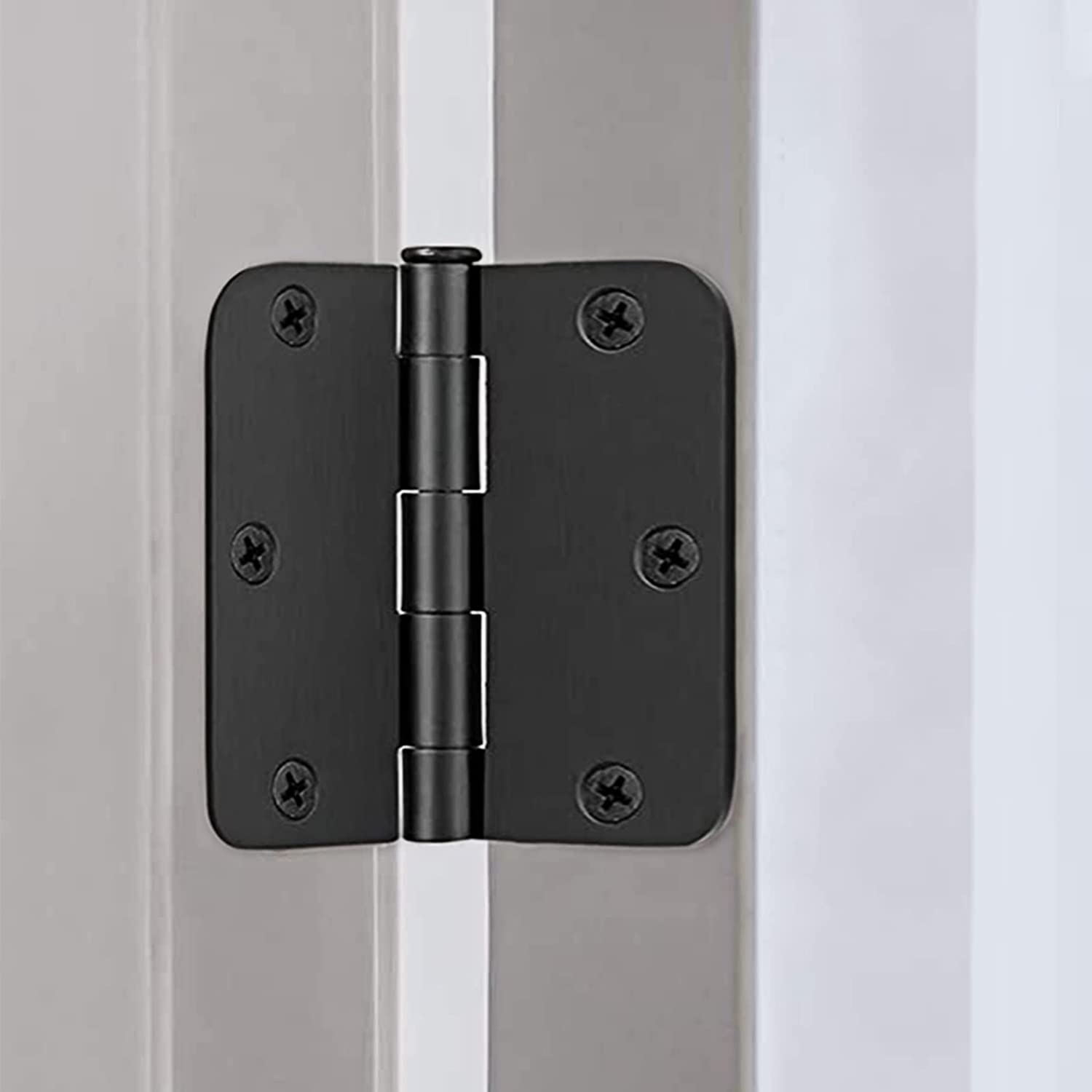
Some doors do not fit standard measurements. Specialty and commercial door hinge sizes are available for unique projects or heavy-duty needs. These hinges come in many shapes and sizes to fit non-standard doors.
Heavy-duty hinges support large or extra-thick doors in schools, hospitals, or commercial buildings.
Pivot hinges allow doors to swing in both directions, often used in restaurants or public spaces.
Concealed hinges hide inside the door and frame, giving cabinets and modern doors a clean look.
Continuous (piano) hinges run the full length of the door, providing extra support for long or heavy doors.
Specialty hinges offer solutions for unusual door designs or challenging installations. Always check the manufacturer’s recommendations when selecting these types.
Callout: Specialty hinges may require custom installation or special tools. Consult a professional if you are working with non-standard doors.
Choosing the right door hinge sizes ensures your door works smoothly and lasts longer, whether you use standard, specialty, or commercial hinges.
How Many Hinges Per Door
Hinge Quantity by Door Height
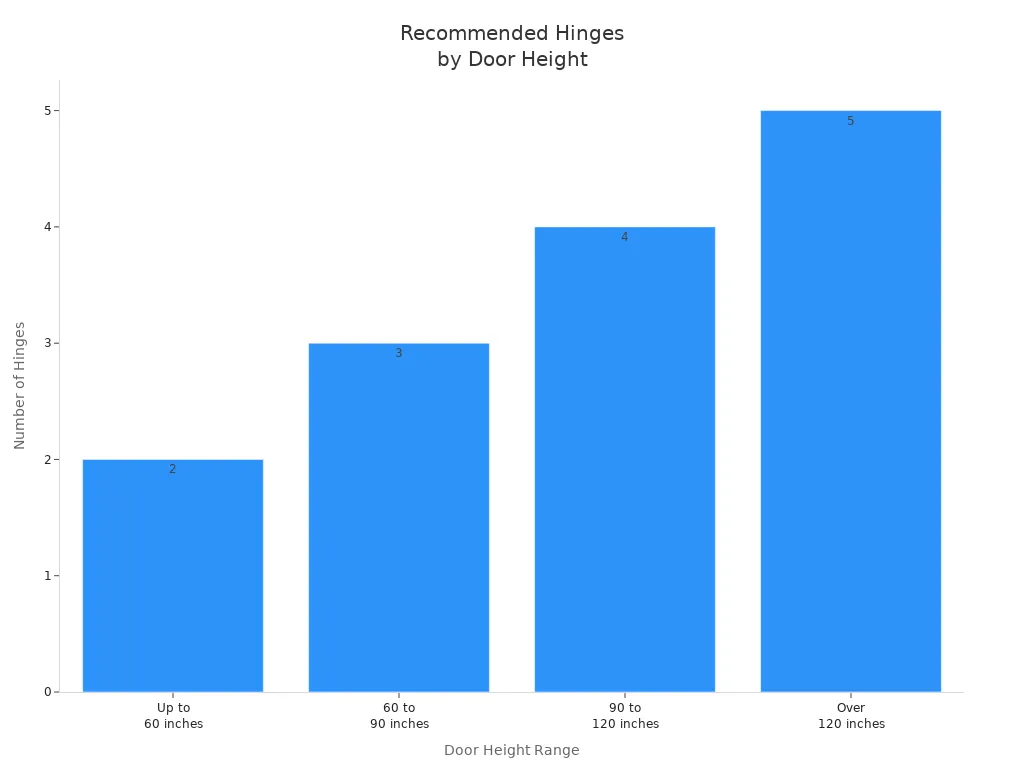
The number of hinges on a door depends mainly on its height. Industry standards and building codes provide clear guidelines. Shorter doors need fewer hinges, while taller doors require more for stability. The following table shows the recommended hinge quantity for different door heights:
Door Height | Number of Hinges | Typical Application |
|---|---|---|
Up to 60 inches (5 ft) | 2 Hinges | Access panels, short storage doors |
60 to 90 inches (up to 7.5 ft) | 3 Hinges | Standard residential entry doors |
90 to 120 inches (up to 10 ft) | 4 Hinges | Luxury entryways, commercial warehouses |
Over 120 inches (10 ft+) | 5+ Hinges | Industrial or custom architectural doors |
Tip: Always count the number of hinges before installing or replacing them. This helps prevent sagging and ensures smooth operation.
A visual chart can help you quickly see the recommended hinge quantity for different door heights:
Extra Hinges for Heavy Doors
Heavy or tall doors need extra support. Solid wood doors and oversized entryways often weigh much more than standard doors. Adding a third hinge in the middle provides critical support and prevents sagging. For doors over 96 inches, four or more hinges are essential.
Door Type & Size | Recommended Number of Hinges | Notes |
|---|---|---|
Solid Wood/Heavy Door (Up to 80″) | 3 Hinges | Prevents sagging under weight |
Tall Door (80″–96″) | 3 Hinges | Middle hinge adds critical support |
Extra Tall/Heavy Door (Over 96″) | 4+ Hinges | Essential for oversized doors |
Note: Always use heavy-duty hinges for solid wood or extra-tall doors. This increases safety and extends the life of the door.
Door Type Considerations
Interior Doors
Interior doors in homes usually weigh less and do not face harsh conditions. Most interior doors measure 6 feet 8 inches in height, 28 to 32 inches in width, and 1-3/8 inches in thickness. For these doors, a 3.5" × 3.5" plain bearing hinge works well. Use two hinges for doors up to 60 inches tall. For doors between 60 and 90 inches, three hinges provide better support. Four hinges are best for doors up to 120 inches.
Application | Door Height | Door Width | Thickness | Weight | Recommended Hinge(s) |
|---|---|---|---|---|---|
Residential Interior Door | 6'8" | 28–32" | 1-3/8" | ≤ 50 lbs | 3.5" × 3.5" plain bearing (2 or 3) |
Tip: Interior door hinges focus on smooth movement and privacy, not weather resistance.
Exterior Doors
Exterior doors must handle more weight and face weather changes. These doors use larger, thicker hinges made from strong metals like stainless steel. Exterior hinges often include security features such as non-removable pins. They resist rust and corrosion, which is important in humid or coastal areas. In cold climates, heavy-duty steel or cast iron hinges with weatherproofing work best.
Feature | Interior Door Hinges | Exterior Door Hinges |
|---|---|---|
Materials | Wood, basic metals | Stainless steel, brass, bronze |
Size | Smaller, thinner | Larger, thicker |
Load Capacity | Standard | High |
Weather Resistance | Not required | Essential |
Security Features | Basic | Enhanced (non-removable pins) |
Exterior hinges are built to last in rain, humidity, and extreme temperatures.
Security is a priority for exterior doors.
Cabinet Doors
Cabinet doors need special hinges based on their construction and style. Face frame cabinets use hinges that attach to a solid wood frame. Frameless cabinets require hinges that mount inside the cabinet box. Overlay doors cover the cabinet opening and need specific hinge types. Inset doors fit inside the opening and often use non-mortise or surface mount hinges.
Hinge Type | Description |
|---|---|
Face Frame | Attaches to a solid wood frame, good for single pivot hinges. |
Frameless | Mounts inside the box, ideal for tight fits with multi-pivot hinges. |
Overlay Doors | Covers the opening, needs compatible hinges. |
Inset Doors | Fits within the opening, uses non-mortise or surface mount hinges. |
Concealed Hinges | Hidden when closed, for modern designs. |
Soft-Close Hinges | Closes gently, reduces noise. |
Self-Close Hinges | Pulls door closed automatically. |
Free-Swing Hinges | Allows free movement, basic type. |
Consider cabinet construction and overlay type.
Choose hinge features like soft-close or self-close for convenience.
Quick Reference for Hinge Selection
Choosing the right hinge can feel confusing. A quick reference guide helps you make decisions fast. Use the table below to match hinge types with common applications and key features.
Hinge Type | Applications | Key Features |
|---|---|---|
Type A | Cabinets | Easy to install, durable |
Type B | Doors | Adjustable, strong support |
Type C | Windows | Weather-resistant, sleek design |
This table gives a clear overview. You can see which hinge works best for your project.
Steps for Fast Hinge Selection:
Measure your door’s thickness and height.
Check the door type: interior, exterior, or cabinet.
Use the table to find the hinge that matches your application.
Choose a hinge with features that fit your needs, such as weather resistance or easy installation.
Tip: Always double-check your measurements before buying hinges. This prevents mistakes and saves time.
Common Hinge Sizes and Uses:
3.5" x 3.5": Interior doors, light weight
4" x 4": Exterior doors, medium weight
4.5" x 4.5": Heavy entry doors
A quick reference guide like this makes hinge selection simple for DIY homeowners. You can avoid confusion and finish your project with confidence.
Choosing the right hinge size involves measuring door thickness, height, and weight. Always double-check measurements and use a reference chart. Common mistakes include using hinges too small for heavy doors or misaligning hinges. If unsure, consult a professional. With careful steps, hinge selection becomes simple and reliable.
FAQ
What tools do I need to measure for door hinges?
A tape measure and a pencil work best. Calipers give more accuracy for thickness. Always write down your measurements before shopping.
Can I use the same hinge size for all doors?
No. Interior, exterior, and cabinet doors need different hinge sizes. Always match the hinge to the door’s thickness, height, and weight.
How do I know if I need heavy-duty hinges?
Use heavy-duty hinges for:
Solid wood doors
Exterior doors
Doors over 90 inches tall
These hinges prevent sagging and increase safety.
Related articles
-
Choosing the Right Outdoor Hinges for Your Garden Gates
Select outdoor hinges by matching hinge type, size, and material to your garden gate’s weight, width, and weather for lasting performance.Jan-22-2026 Learn More >> -
How to identify door hinge types
location, shape, and features. Find out how to match hinges to your door’s weight, style, and usage needs.Jan-22-2026 Learn More >> -
Top Tips for Choosing White Door Hinges for a Stylish Home
White door hinges offer a clean, modern look and versatile style while providing durable, low-maintenance hardware for any home decor.Jan-22-2026 Learn More >>

Contact
Tel: +8613325838282
Add: 12819 Telegraph Road Santa Fe Springs, CA 90670
Follow Us:


