
How to Identify the Right Hinge for Any Home or DIY Project
How to Identify the Right Hinge for Any Home or DIY Project
Selecting the right hinge depends on door type, location, and style preferences. People should understand different types of hinges, materials, and installation needs. TDC Hinges provide solutions for all situations. The table below shows common hinge types and their uses:
Type of Hinge | Market Prevalence | Applications |
|---|---|---|
Concealed Hinges | 45% | Contemporary designs |
Continuous Hinges | 30% | Heavy doors, high-traffic areas |
Pivot Hinges | Less common | Unique functionality |
Choosing the Right Hinge
Assess Project Needs
Selecting the right hinge starts with a clear assessment of the project requirements. Every home or DIY project presents unique challenges, so understanding the environment and intended use is essential. TDC Hinges offer a wide range of solutions, making it easier to match the hinge to the specific demands of each project.
Material selection depends on environmental conditions. Stainless steel hinges resist moisture and corrosion, making them ideal for outdoor or high-humidity areas. Brass hinges provide a classic look and anti-microbial properties, suitable for kitchens and bathrooms.
Load capacity matters. Heavy doors require robust hinges, such as ball bearing or T hinges, while lightweight cabinets can use concealed or butt hinges.
Durability needs vary. High-traffic doors benefit from heavy-duty hinges, while decorative hinges suit low-frequency use.
Cost constraints influence choices. Budget-friendly options like face mount hinges work well for simple retrofits, while premium hinges offer advanced features.

The intended use of the door or cabinet also guides hinge selection:
Full overlay doors often use Euro or hidden hinges for a seamless appearance.
Partial overlay doors fit butt or pivot hinges.
Inset doors require precise hinges, such as pivot or butt types.
Functionality matters. Soft-closing hinges reduce noise, self-closing hinges suit busy areas, and removable hinges simplify maintenance.
TDC Hinges provide tailored solutions, including spring hinges for automatic closing, T hinges for added support, and lift-off hinges for easy removal. Customization options allow adjustments in size, finish, and design to meet unique project needs.
Consider Load and Size
The size and load-bearing capacity of a hinge directly affect performance and safety. Matching the hinge to the weight and frequency of use ensures long-term reliability. TDC Hinges undergo rigorous testing to guarantee durability and smooth operation.
Factor | Description |
|---|---|
Hinge leaf size and thickness | Thicker leaves handle more weight. |
Pin diameter and design | Robust pins withstand greater forces. |
Material strength and composition | Stainless steel hinges offer superior load capacity. |
Number of hinges used | Multiple hinges share the weight, reducing strain. |
Mounting method and fastener quality | Quality installation improves load-bearing capacity. |
Load direction and frequency of use | Door usage impacts hinge performance over time. |
Environmental considerations | External factors affect durability and load capacity. |
For example, kitchen cabinets with concealed hinges require low to medium load capacity, while heavy entry doors need ball bearing hinges for high-frequency use. Outdoor gates benefit from TDC T hinges or stainless strap hinges, which resist corrosion and prevent sagging.
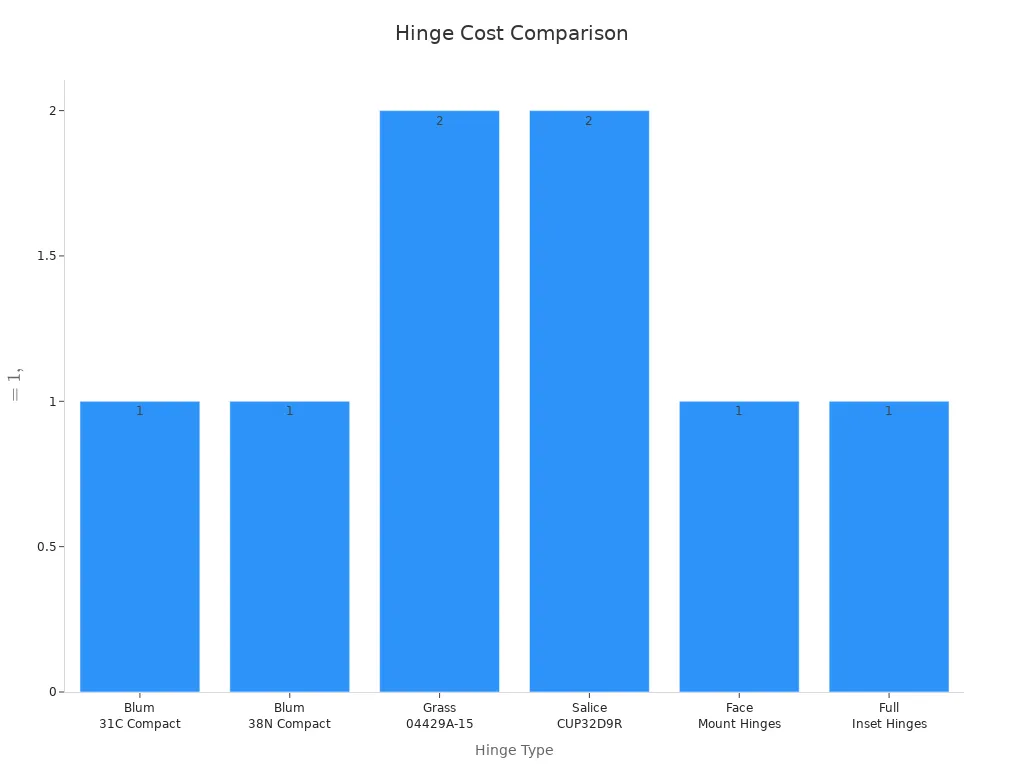
Budget-conscious DIY projects often compare hinge types based on price and features. Face mount hinges offer affordability, while soft-close and adjustable hinges provide premium functionality at a higher cost.
Installation and Maintenance
Proper installation and ongoing maintenance extend the life of any hinge. TDC Hinges feature user-focused designs that simplify installation and reduce maintenance needs.
Common installation challenges include:
Installation Error | Risk | Maintenance Cost Implication |
|---|---|---|
Misaligned hinges | Door binding, uneven wear | Increased repair frequency |
Incorrect screw selection | Loosening, detachment | Frequent re-tightening or replacement |
Skipped pre-drilling | Weak anchoring | Door sagging, hinge damage |
Accurate measurements prevent mistakes. Using a measuring tape and marking guide ensures consistent placement, especially for invisible hinges.
Proper hinge placement is critical. The first hinge should sit about 5 inches from the top of the door, the bottom hinge about 10 inches from the bottom, and a third hinge placed equally between them.
Uneven placement or incorrect distance from the door edge leads to misalignment and operational issues.
Maintenance requirements depend on hinge material and finish:
Regular cleaning and lubrication prevent squeaking and corrosion.
Polished brass finishes need frequent upkeep.
Matte black or oil-rubbed bronze finishes require minimal maintenance.
Steel hinges need protective treatment for outdoor use, while stainless steel hinges offer low-maintenance durability.
TDC Hinges use top-grade materials and undergo stringent testing, ensuring they withstand daily wear and environmental factors. Their customization options allow users to select finishes and designs that minimize maintenance and maximize performance.
Tip: Choosing the right hinge finish protects against corrosion and reduces maintenance needs, improving long-term safety and functionality.
Selecting the right hinge involves understanding different types of hinges, matching them to project requirements, and considering installation and maintenance factors. TDC Hinges provide reliable, stylish, and customizable solutions for every home or DIY project.
Exploring Different Types of Hinges
Common Hinge Types
Many home and DIY projects require an understanding of the different types of hinges available. TDC offers a wide selection to meet these needs. The most widely used hinge types in residential construction and furniture making include:
Butt hinges: Simple, robust, and easy to install for interior doors and cabinets.
Concealed hinges: Hidden when closed, providing a clean look for modern kitchens and furniture.
Soft-close hinges: Prevent slamming and allow gentle closing, popular in kitchens and bathrooms.
Piano (continuous) hinges: Offer stability and durability for long panels or doors.
Overlay hinges: Allow cabinet doors to cover the face frame entirely.
The table below compares three common types:
Hinge Type | Application | Performance Characteristics |
|---|---|---|
Butt Hinges | Standard doors, cabinet doors | Easy to install, affordable, versatile |
Continuous Hinges | Commercial doors, high-traffic doors | Excellent weight distribution, durable, secure |
Concealed Hinges | Kitchen cabinets, modern doors | Invisible when closed, adjustable, sleek appearance |
These different types of hinges provide both movement and stability, supporting doors and panels while allowing smooth operation.
Material and Finish Options
Material selection plays a key role in hinge performance. TDC manufactures hinges in stainless steel, brass, and zinc alloy to suit various environments.
Material | Advantages | Disadvantages |
|---|---|---|
Stainless Steel | Corrosion resistance, easy maintenance, strength | Higher cost |
Brass | Durability, aesthetic versatility, malleability | More expensive |
Zinc Alloy | Budget-friendly, attractive finishes, lightweight | Lower strength, may rust if surface is damaged |
The material used in a hinge affects its durability, corrosion resistance, and load capacity. Moisture, humidity, and temperature can impact hinge performance, so stainless steel works best outdoors or in damp areas, while brass suits decorative indoor applications.
Finish options also matter. They influence corrosion resistance, scratch protection, and the overall look and feel of the hinge. TDC offers matte black, polished brass, and brushed nickel finishes to match any style.
Specialized Hinges for Unique Needs
Some projects require specialized solutions. TDC provides different types of hinges for unique requirements:
T-hinges: Ideal for gates, barn doors, and outdoor sheds. They offer strength and visual appeal.
Spring hinges: Automatically close doors, maintaining privacy and security.
Lift-off hinges: Allow easy removal of doors without tools, useful for maintenance or accessibility.
Decorative hinges: Enhance the look of entryways, kitchens, and living rooms, adding character and style.
These different types of hinges help address specific challenges, from heavy-duty support to aesthetic upgrades. TDC’s range ensures every project finds the right hinge for both function and design.
Selecting the right hinge involves several steps:
Understand different hinge types.
Choose material and finish.
Evaluate load capacity and size.
Consider installation.
Prioritize durability.
Consulting experts or using factory-direct customization from TDC Hinges ensures tailored solutions, durability, and reduced maintenance costs. Matching hinge type and material improves safety and performance.
FAQ
What are different types of hinges?
Different types of hinges include butt, concealed, piano, spring, T, and lift-off hinges. Each type serves specific functions in doors, cabinets, and furniture.
What are the different types of cabinet door hinges?
Cabinet door hinges include concealed, overlay, inset, and soft-close hinges. These hinges provide smooth operation and help achieve a seamless or decorative appearance.
What are the different types of door hinges?
Door hinges often include butt, ball bearing, spring, and continuous hinges. Each hinge supports different door weights and usage frequencies.
Related articles
-
Understanding Standard Door Hinge Sizes for Every Home
Standard door hinge size for most homes is 3.5" for interiors and 4" for exteriors. Measure your door to ensure the right fit and smooth operation.Feb-09-2026 Learn More >> -

The Importance of Choosing the Right Commercial Hinges for Your Business
Choosing the right commercial hinges boosts safety, reduces maintenance costs, and ensures reliable door performance for any business environment.Feb-09-2026 Learn More >> -
Why Brass Hinges Are the Perfect Choice for Modern Homes
A brass hinge resists tarnish, adds timeless style, and suits any décor, making it the ideal choice for modern homes seeking durability and elegance.Feb-09-2026 Learn More >>

Contact
Tel: +8615026919634
Email: allen@tdc-hardware.com
Add: 12819 Telegraph Road Santa Fe Springs, CA 90670
Follow Us:


