
Simple Ways to Remove Door Hinges Without Damage
Simple Ways to Remove Door Hinges Without Damage
Wondering how to remove hinges from a door without causing damage? Start by grabbing a screwdriver, hammer, and a shim. Quality hinges, like TDC’s, make this job smoother. Most people just need to support the door, tap out the pins, and lift the door safely—no special skills required!
Tools and Prep for Removing Hinges
Tools and Materials List
Before you start, gather the right tools. Having everything ready makes the job much easier and helps you avoid damage. Here’s what you’ll need:
Flathead screwdriver or Phillips screwdriver (depending on your hinge screws)
Hammer
Utility knife
Shims or wedges
Cardboard or an old towel
Safety glasses and gloves

If you use TDC hinges, you’ll notice how smooth the process can be. Their hinges are designed for easy removal and reinstallation, which means less struggle and less risk of damaging your door or frame.
Tip: Always use the correct tools for the job. Avoid makeshift items like nails or random objects to tap out hinge pins. This helps prevent bent pins and keeps your trim looking good.
Prepare the Door and Area
Getting your space ready is just as important as having the right tools. Here are a few simple steps to follow before you remove the door:
Place cardboard or an old towel under the door. This protects your floor from scratches or dents if the door shifts.
Slide shims or wedges under the door to support its weight. This keeps the door steady and prevents it from falling when you remove the hinges.
Clear the area around the door. Make sure you have enough space to move and set the door aside safely.
Taking a few minutes to prep your workspace can make the whole process smoother. When you’re ready, you’ll find it much easier to remove the door without any hassle.
How to Remove Hinges from a Door
Removing door hinges might sound tricky, but with the right approach, you can do it without damaging your door, frame, or hardware. Let’s walk through the steps to removing the door, how to remove hinge pins, and what to do if you run into stubborn or painted hinges.
Steps to Removing the Door
Here’s a simple, step-by-step guide for how to remove hinges from a door safely:
Support the Door
Place a wedge, wood block, or shim under the door. This keeps the door steady and prevents it from collapsing or shifting while you work.Cut Through Paint or Sealant
If you see paint or caulk around the hinges, use a utility knife to score along the edges. This helps prevent peeling or chipping paint when you remove the hinge pins.Remove Hinge Pins
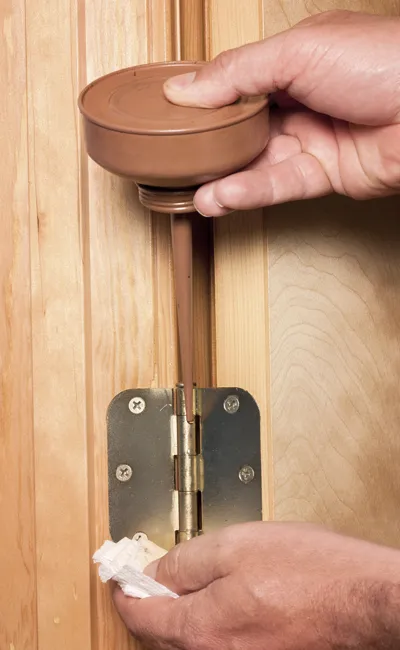
Start at the bottom hinge. Spray a little penetrating oil at the base of the pin if it looks rusty or stuck. Wait about 10 minutes for the oil to work. Use a flathead screwdriver or a pin punch and gently tap upward with a hammer until the pin pops out. Repeat for the top hinge.Unscrew the Hinges
With the pins out, use your screwdriver to remove the screws from the door-side leaf first, then the frame-side. Always start with the top hinge and work your way down.Take a Door Off the Hinges
Once all pins and screws are removed, tilt the top of the door toward you and lift it straight up. If the door feels heavy, ask someone to help you remove a door safely.
Tip: TDC’s lift-off hinges make this process even easier. Their quick-remove design means you can take a door off the hinges without tools, and realignment during reinstallation is a breeze.
Remove Hinge Pins
The pin is the small rod that holds the two hinge leaves together. Here’s how to remove hinge pins without causing damage:
Make sure the door is supported with a wedge or shim.
Check if the hinge has a removable pin. Most residential hinges do, but some commercial or security hinges may not.
For removable pins, use a pin punch or flathead screwdriver. Place it under the pin’s head and tap gently with a hammer.
If the pin is stuck, apply more penetrating oil and let it sit. Tap lightly again.
For painted-over pins, score around the cap with a utility knife before removing the pin.
Once the pin is loose, pull it out with your fingers or pliers.
Note: TDC hinges are designed for smooth operation, so removing the pin is usually quick and easy. Their ball bearing design helps prevent pins from sticking due to rust or dirt.
Take a Door Off the Hinges
After you remove hinge pins and unscrew the hinge leaves, you’re ready to take a door off the hinges. Here’s how to remove hinges from a door without damaging anything:
Close the door and place cardboard or a towel underneath to protect your floor.
With all pins and screws removed, tilt the door slightly toward you.
Lift the door straight up to clear the hinges.
Set the door aside on a soft surface.
If the door is heavy or awkward, don’t hesitate to ask for help. This step is important for preventing injuries and keeping your door and frame in good shape.
Troubleshoot Stuck or Painted Hinges
Sometimes, you’ll run into hinges that just won’t budge. Here’s how to remove hinges from a door when things get tough:
Stuck Pins:
Apply penetrating oil like PB Blaster and let it soak in.
Tap gently with a hammer and pin punch.
If the pin still won’t move, try a slide hammer or a hinge pin removal tool.
Painted-Over Hinges:
Score around the hinge and pin cap with a utility knife to break the paint seal.
Use a heat gun on low to soften thick paint, then gently scrape it away.
For removable hinges, you can boil them in water or soak them in vinegar to loosen paint before scraping.
Rusty Hinges:
Soak the hinge in vinegar overnight to loosen rust.
Use a wire brush or steel wool to clean off residue.
Lubricate the pin before reinstalling.
Safety Reminder: Always wear gloves and safety glasses. Avoid using excessive force, which can strip screws or damage the frame. If you encounter welded hinges or extremely stubborn pins, consider calling a professional.
Why TDC Hinges Make Removal Easier
Benefit | Description |
|---|---|
Durability | TDC hinges resist rust and damage, lasting longer even in tough conditions. |
Smooth Operation | Ball bearing design means pins slide out easily, reducing frustration. |
Quick-Remove Design | Lift-off hinges allow you to take a door off the hinges without tools. |
Minimal Maintenance | Less need for oiling or repairs, saving you time and effort. |
Versatile Finishes | Multiple finishes match any décor, so your doors look great after every reinstallation. |
If you’re wondering how to remove hinges from a door for regular maintenance or upgrades, investing in high-quality hinges like TDC’s can save you time and hassle every time you need to remove a door.
Remember: The right tools, a little patience, and quality hardware make all the difference. Follow these steps to removing the door, and you’ll keep your doors, frames, and hardware looking their best.
Removing door hinges is simple when you follow these steps: support the door, cut paint, remove pins, and unscrew hinges. Always wear safety gear and keep your area clear. Quality hinges like TDC offer long-term savings and durability:
Benefit | Description |
|---|---|
Reduced Maintenance Costs | Save money over time with reliable hardware. |
Enhanced Durability | TDC hinges last longer and resist wear. |
If you run into trouble, check out these professional services:
Service Type | Description |
|---|---|
Door hinge repair | Fix squeaks, misalignment, or hardware issues. |
Hinge replacement | Swap out damaged or rusted hinges. |
Hinge installation | Install new or upgraded hardware. |
If you feel unsure or face stubborn hinges, don’t hesitate to call a pro!
FAQ
How do I remove the pin from a door hinge?
Just tap the bottom of the pin with a screwdriver and hammer. Pull it out with your fingers or pliers once it loosens.
How do I remove hinges from a door?
First, support the door with shims. Unscrew the hinge leaves from the door and frame. Lift the door off gently. That’s it!
How do I remove a door from its hinges?
Close the door. Remove the hinge pins. Tilt the door toward you and lift it up. Ask for help if the door feels heavy.
Related articles
-
The Benefits of Choosing Inset Cabinet Hinges for Your Home Renovation
Inset cabinet hinges offer a seamless look, smooth operation, and lasting durability, making them a smart choice for your home renovation project.Apr-01-2026 Learn More >> -
How Modern Door Hinges Are Transforming Home Design
Modern door hinges blend style and functionality, offering durability, security, and seamless design for contemporary homes.Apr-01-2026 Learn More >> -
Make a Bold Statement with Black Hinges for Interior Doors
Interior door hinges black add bold contrast and sophistication, fitting modern or classic styles while elevating your home's overall aesthetic.Apr-01-2026 Learn More >> -
How to measure hinges on a door
Measure hinges on a door by checking height, width, thickness, and corner radius for a precise fit. Use a tape measure for accurate hinge sizing.Apr-01-2026 Learn More >>

Contact
Tel: +8613325838282
Add: 12819 Telegraph Road Santa Fe Springs, CA 90670
Follow Us:


