
Choosing the Right Exterior Door Hinges: Key Features and Benefits
Choosing the Right Exterior Door Hinges: Key Features and Benefits
Selecting the right exterior door hinges increases security, extends door life, and ensures easy movement. Homeowners often look for hinges with features that protect against forced entry. These include security tab or stud hinges that lock leaves together, non-removable pin hinges that prevent tampering, and continuous hinges that cover the entire door edge. Front door hinges with these qualities help keep families safe and doors functioning reliably.
How to Choose the Right Exterior Door Hinges
Choosing the best exterior door hinges requires careful evaluation of several key features. Homeowners and builders should match hinge specifications to the door’s weight, material, and location. This section explains how to choose the right exterior door hinges by focusing on material, load capacity, security, weather resistance, and installation.
Material and Finish
The durability and appearance of exterior door hinges depend on their material and finish. Different hinge finishes and materials offer unique benefits for various environments.
Stainless steel hinges provide excellent strength and resist corrosion, making them ideal for areas with high moisture or chemical exposure.
Steel hinges with protective coatings deliver strong support and design flexibility. Coatings improve their resistance to rust.
Aluminum hinges are lightweight and naturally resist corrosion. They work well for doors where weight matters.
Brass and bronze hinges add visual appeal and moderate corrosion resistance. These are often used in marine hardware or decorative settings.
The following table compares common materials and their best use cases:
Material | Corrosion Resistance | Ideal Use Case |
|---|---|---|
Stainless Steel | High | Humid or coastal areas |
Brass | Moderate | Decorative purposes in traditional homes |
Zinc-Plated Steel | Low | Budget-friendly option |
Aluminum | Moderate | Lightweight doors |
Bronze | High | Heavy-duty applications |
Selecting the right hinge finishes and materials increases the lifespan of exterior door hinges, especially in challenging climates.
Weight and Load Capacity
The weight and size of the door determine the type and number of hinges needed. Most exterior doors measure about 1-3/4 inches thick. Standard doors require 4-inch hinges, and three hinges usually provide stability and even weight distribution. Heavier doors, such as solid wood or metal, need larger hinges to support extra weight. For doors over 120 pounds or taller than average, 4-1/2-inch hinges are recommended.
Manufacturers test hinges using static weight loading, dynamic opening under stress, and torque force to ensure smooth operation. The table below shows recommended hinge types and their load capacities:
Hinge Types | Recommended Door Weight | Typical Door Size | Application Scenarios |
|---|---|---|---|
4 inch door hinges | ≤40kg | Light commercial doors | Utility rooms / Small stores |
Stainless steel door hinges | 40–120kg | Mid-heavy doors | Hotels / Hospitals / Schools |
Self-closing door hinges | ≤100kg | Single panels | Public access & emergency exit routes |
Self-closing cabinet hinges | ≤20kg | Cabinets and storage | Retail & hospitality |
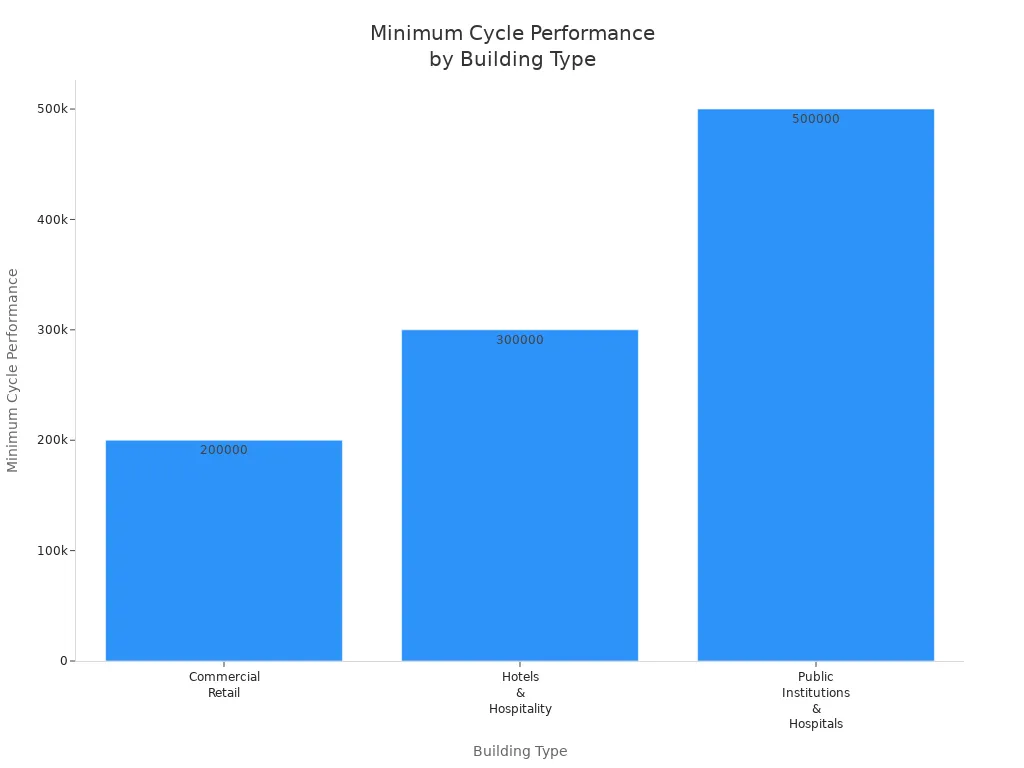
Hinges in commercial buildings must withstand thousands of cycles. The chart below compares minimum cycle performance across building types:
Security Features
Security remains a top priority when selecting exterior door hinges. Effective security features help prevent forced entry and protect property.
Security Feature | Description |
|---|---|
Deadbolts | Reliable deadbolts cannot be easily forced open and should be Grade 1 or Grade 2 for maximum security. |
Strike Plates | Heavy-gauge metal strike plates with long screws enhance door strength against kicks. |
Smart Locks & Keyless Entry | Modern smart locks offer convenience and security with encrypted access and alarms. |
Door Viewers & Peepholes | Allow homeowners to see who is at the door before opening, deterring potential intruders. |
Door Closers | Ensure doors close securely, reducing the risk of them being left ajar. |
Security Hinges & Hinge Bolts | Prevent removal of doors by securing hinges, especially for outward-swinging doors. |
Full Entry Door Reinforcement Kits | Strengthen multiple points of the door against forced entry. |
Security hinges and hinge bolts are especially important for outward-swinging doors, as they prevent removal and tampering.
Weather Resistance
Exterior door hinges face constant exposure to the elements. Weather-resistant technologies and coatings help prevent rust and corrosion.
Galvanized hinges use a zinc coating to block rust.
Powder-coated hinges feature a durable layer that shields against moisture.
Stainless steel hinges resist rust due to their chromium content.
Brass hinges offer natural resistance and can be enhanced with clear coatings.
Tip: In coastal or humid regions, stainless steel or powder-coated hinges last longer and require less maintenance.
Ease of Installation
Proper installation ensures exterior door hinges function smoothly and securely. Homeowners often encounter challenges such as loose hinges, misalignment, and stuck hinge pins. Addressing these issues early prevents long-term problems.
Common installation challenges include:
Loose hinges from wear, poor maintenance, or low-quality hardware.
Misalignment causing doors to not sit flush.
Stuck hinge pins due to dirt or rust.
To install hinges successfully, homeowners need basic tools and skills:
Precision in measurement prevents misalignment.
Sharp tools create clean cuts for mortises.
Drill perpendicular pilot holes for proper screw alignment.
Use wood filler to close gaps.
Sand edges for a smooth, flush fit.
Essential tools include a tape measure, drill, pry bar, oscillating tool or Sawzall, safety goggles, sill pan, caulking gun, silicone caulk, shims, 4-foot level, and 2.5-inch trim screws.
Note: Always inspect the door and opening before installation. Confirm the correct product and follow manufacturer instructions for best results.
By following these guidelines, homeowners can select and install exterior door hinges that match their door type, environment, and security needs.
Types of Exterior Door Hinges
Standard Hinges
Standard hinges, often called butt hinges, remain the most common choice for exterior doors. These types of hinges feature two rectangular plates joined by a pin. Butt hinges work well for most residential entry doors, providing reliable movement and basic security. Homeowners often select heavy-duty exterior door hinges in this style for solid wood or metal doors. Butt hinges also appear in commercial settings where durability is important.
Strap and T-Strap Hinges
Strap and T-strap hinges offer extra support for large or heavy exterior doors. Their long, extended arms distribute weight across a wider area, which increases stability and load capacity. This design makes them ideal for gates, barn doors, and oversized entryways. Strap hinges enhance the structural integrity of heavy doors, reducing sagging and improving long-term performance.
Pivot Hinges
Pivot hinges mount at the top and bottom of the door, rather than on the side. These types of exterior door hinges suit commercial buildings and high-traffic areas. The table below highlights their main advantages:
Advantage | Description |
|---|---|
Durability | Pivot hinges manage heavy loads by transferring weight vertically, reducing frame stress. |
Smooth Operation | They provide smooth, stable movement and better alignment, enhancing safety and usability. |
Aesthetic Appeal | Concealed options offer a clean, minimalist look suitable for various door materials. |
Stability | Unlike traditional hinges, pivot hinges distribute weight evenly, ensuring long-term stability. |
Spring Hinges
Spring hinges, another type of butt hinge, include a built-in spring mechanism. These hinges automatically close the door after opening. The table below explains their benefits:
Feature | Benefit |
|---|---|
Automatic Closure | Ensures doors automatically close after opening, enhancing security and privacy. |
Safety and Security | Provides controlled closure, reducing the risk of doors slamming shut or remaining open. |
Security Doors | Ideal for high-security areas, ensuring doors remain closed and secure. |
Concealed and Security Hinges
Concealed hinges, sometimes called european hinges, hide within the door and frame when closed. This hidden design makes them less vulnerable to tampering or forced entry. Security hinges, including continuous hinges and reinforced butt hinges, add extra protection for outward-swinging doors. Key benefits include:
Concealed hinges are hidden when the door is closed, making them less vulnerable to tampering or forced entry.
Increased security due to hidden design, making them harder to tamper with.
Ideal for security doors and entrances.
European hinges also provide a clean look and smooth operation, making them popular for modern homes. These types of hinges improve both security and appearance.
Security and Functionality Benefits
Enhanced Security
Exterior door hinges play a vital role in protecting homes. Security and functionality improve when homeowners choose hinges with features like non-removable pins, security tabs, and continuous hinges. These designs make it difficult for intruders to tamper with doors. Heavy-duty exterior door hinges add another layer of defense, especially for outward-swinging doors. Many modern hinges also work with reinforced strike plates and smart locks, creating a strong barrier against forced entry.
Tip: Continuous hinges cover the entire length of the door, reducing weak points and increasing overall security.
Improved Durability
High-quality exterior door hinges use robust materials such as stainless steel, brass, or bronze. These metals resist rust and corrosion, even in harsh weather. Durable hinges maintain door alignment and functionality over time. They withstand frequent use and temperature changes, which helps entry doors last longer. Investing in reliable hinges also reduces the need for repairs and replacements, saving money and effort.
Smooth Operation
Functionality depends on how smoothly a door opens and closes. Modern hinges use several mechanisms to ensure quiet and easy movement:
Specially designed bearings reduce resistance, allowing the door to glide smoothly.
Silent door hinges utilize advanced anti-friction mechanisms to minimize noise during operation.
Proper lubrication techniques prevent creaks and squeaks, ensuring quiet movement.
Smooth operation increases energy efficiency by helping doors seal tightly, which keeps out drafts and moisture.
Aesthetic Appeal
Decorative exterior door hinges enhance the look of entryways. Hinges come in many finishes and styles, allowing homeowners to match or contrast them with door designs. Attractive hinges can elevate the appearance of a home, making the entryway more inviting. The right hinge design adds both functionality and visual interest, blending security and style.
Hinge Style | Visual Impact | Best Use Case |
|---|---|---|
Decorative Hinges | Adds elegance and detail | Traditional or ornate doors |
Minimalist Hinges | Creates a clean, modern look | Contemporary architecture |
Heavy-Duty Hinges | Conveys strength and stability | Large or commercial doors |
Exterior door hinges serve as both functional and decorative elements, contributing to the overall security and functionality of residential architecture.
Matching Hinges to Door and Environment
Door Material Considerations
The material of a door affects which hinges work best. Solid wood doors need strong hinges that can support their weight. Metal doors require hinges with high load capacity and corrosion resistance. Fiberglass doors benefit from hinges that prevent warping and maintain alignment. Homeowners should check the manufacturer's recommendations for hinge type and size. Matching the hinge material to the door ensures reliable performance and reduces wear.
Tip: Always measure door weight and size before choosing hinges. This step helps prevent sagging and misalignment.
Climate and Location Factors
Local climate plays a major role in hinge selection. In coastal regions, salt air increases the risk of rust. Stainless steel hinges resist corrosion and last longer in these environments. High humidity can also damage hinges over time. Materials that withstand moisture, such as powder-coated or galvanized steel, offer better protection.
Coastal areas need hinges with added molybdenum to fight chloride ion pitting.
Stainless steel with 2.0%–3.0% molybdenum stabilizes the hinge surface and improves durability.
Powder-coated finishes shield hinges from rain and humidity.
A table below summarizes hinge choices for different climates:
Climate Type | Recommended Hinge Material | Special Features |
|---|---|---|
Coastal | Stainless steel (with Mo) | High rust resistance |
Humid | Powder-coated or galvanized | Moisture protection |
Dry/Temperate | Brass, bronze, or steel | Standard corrosion resistance |
Frequency of Use and Door Size
Doors that see frequent use or have large dimensions need hinges designed for heavy loads. Commercial buildings and busy entryways often use ball bearing hinges for smooth movement. Oversized doors require hinges with higher load ratings, such as the TECTUS TE 640 3D, which supports up to 440 lbs. Hinges with protective finishes, like galvanization, extend service life in outdoor settings.
Ball bearing hinges reduce friction and noise.
Heavy-duty models prevent sagging in large doors.
Stainless steel and powder-coated hinges work well for exterior applications.
Selecting the right exterior door hinges based on door weight and size, climate, and material ensures long-lasting security and smooth operation.
Common Mistakes to Avoid
Overlooking Security Features
Many homeowners miss important security features when choosing exterior door hinges. They often focus only on appearance or price. Security features protect homes from forced entry and tampering. Key elements that people frequently overlook include:
Material quality, which affects strength and resistance to break-ins.
Built-in security features such as non-removable pins and security studs.
The overall design and style of the hinges, which can impact security.
Tip: Always check for hinges with non-removable pins and security studs. These features make it harder for intruders to remove the door.
Ignoring Weather Resistance
Weather resistance plays a major role in hinge performance and longevity. Some homeowners ignore this factor, which leads to problems over time. Moisture can enter through small gaps and cause damage. Without proper sealing, doors may suffer from rot, mold, or warping. Using high-quality sealants that match the door material and local climate helps prevent deterioration.
Neglecting weather resistance can also result in rust and corrosion. Damaged hinges lose strength and may not close properly. This creates security risks and operational issues.
Proper sealing prevents moisture intrusion and water damage.
Moisture can cause rot, mold, or warping of door and frame components.
Rust and corrosion compromise the door’s structural integrity.
Choosing Incorrect Size or Type
Selecting the wrong hinge size or type affects door stability and function. Heavy doors need strong, large hinges. Lightweight doors require smaller hinges. Using the incorrect hinge can lead to sagging, misalignment, or difficulty opening and closing the door. Always match hinge specifications to the door’s weight, material, and usage.
Door Type | Recommended Hinge Size | Common Issue if Incorrect |
|---|---|---|
Solid Wood | 4.5 inch | Sagging, misalignment |
Metal | Heavy-duty | Operational failure |
Fiberglass | Standard | Warping, loose fit |
Neglecting Installation Requirements
Improper installation causes many hinge problems. Correct door alignment is essential for smooth operation. Misaligned hinges can scrape, stick, or resist movement. Proper installation prevents sagging and premature wear. Secure and smooth door operation depends on accurate hinge placement.
Correct alignment ensures smooth operation and prevents strain.
Misalignment leads to scraping, sticking, or resistance.
Proper installation prevents sagging and extends hinge lifespan.
Note: Always follow manufacturer instructions and use the right tools for installation. This helps maintain door security and performance.
Selecting the right exterior door hinges protects homes and ensures smooth operation. Homeowners should focus on these key points:
Choose strong materials like stainless steel for durability.
Match hinge size and load capacity to the door’s weight.
Use at least three hinges for stability.
Select hinges with non-removable pins and added security features.
Install hinges correctly and use long screws for secure attachment.
Inspect hinges regularly for wear or rust.
Homeowners can check their current hinges for damage or misalignment and upgrade as needed. For best results, consult a professional or use a detailed checklist before making changes.
FAQ
What is the best material for exterior door hinges?
Stainless steel offers the best durability and corrosion resistance. Homeowners in coastal or humid areas often choose stainless steel. Brass and bronze also work well for decorative or heavy-duty needs.
How many hinges should an exterior door have?
Most exterior doors need at least three hinges. This setup provides stability and helps distribute the door’s weight evenly. Heavy or tall doors may require four hinges for extra support.
Can exterior door hinges be replaced without removing the door?
Yes, people can replace hinges one at a time while the door stays in place. They should support the door with shims or wedges during the process to prevent sagging or misalignment.
How can someone prevent exterior door hinges from rusting?
Regular cleaning and lubrication help prevent rust. Stainless steel or powder-coated hinges resist corrosion. Homeowners should inspect hinges often and apply a protective spray or oil as needed.
Are security hinges necessary for all exterior doors?
Security hinges add protection, especially for outward-swinging doors. They prevent removal and tampering. Most experts recommend security hinges for any exterior door that faces public areas or high-traffic locations.
Related articles
-

Exploring the Versatility of Butt Hinges: Applications Beyond Doors
Butt hinge versatility extends to cabinets, windows, furniture, and specialty equipment, offering strength, durability, and design flexibility for many projects.Dec-02-2025 Learn More >> -
_7.webp)
Black door hinges make any room look stylish
Black door hinges add bold contrast and timeless style, making any room look more sophisticated while matching both modern and classic decor.Dec-02-2025 Learn More >> -
.webp)
The Benefits of Choosing Residential Pivot Hinges for Your Home
Residential pivot hinges offer modern style, smooth operation, and lasting strength for your home's doors, making them a smart upgrade for any space.Dec-02-2025 Learn More >> -
.jpg)
Which residential interior door hinges are best for you
Find the best residential interior door hinges by comparing hinge types, materials, finishes, and features for your home's needs.Dec-02-2025 Learn More >>

Contact
Tel: +8613325838282
Add: 12819 Telegraph Road Santa Fe Springs, CA 90670
Follow Us:


