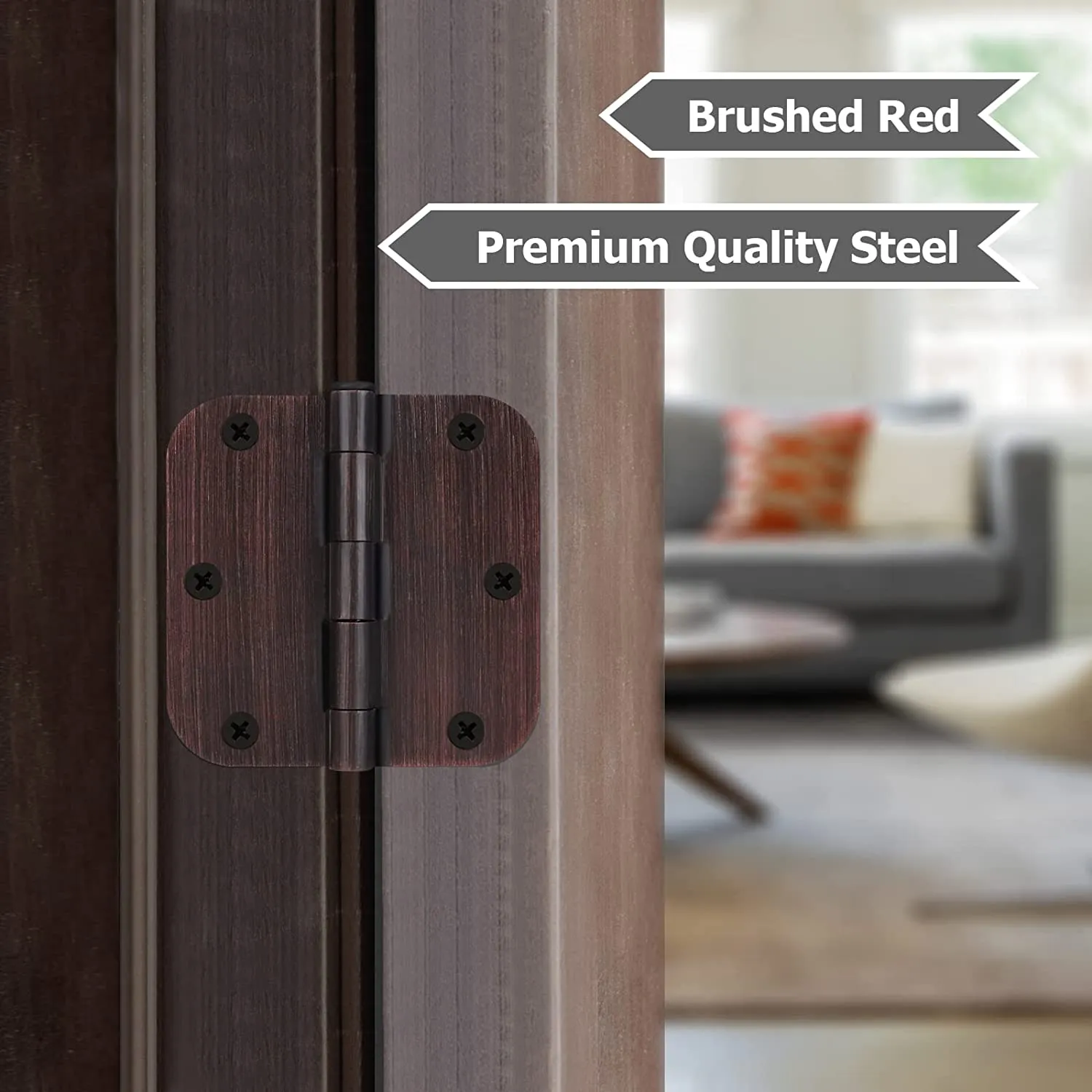
The right cupboard hinge for your home depends on cabinet style, door overlay, and desired features. Many homeowners make mistakes such as underestimating hinge quality, mismatching hinge style, or ignoring door weight. TDC offers customizable, high-quality hinge solutions, making it easy to match cupboard hinge types to your needs.
Choosing the Right Cupboard Hinge
Key Factors for Selection
Selecting the best hinge for your cupboards starts with understanding a few important factors.
Matching the finish of the hinges to other hardware elements in your kitchen, like handles and knobs, helps create a unified look. The right hinge not only supports the door but also adds to the overall design.
Cabinet Style & Door Overlay
Cabinet construction plays a major role in hinge compatibility. Framed cabinets have a visible frame, while frameless cabinets do not. Frameless cabinets offer easier access and larger openings, which influences hinge selection. The overlay is the distance the cabinet door overlaps the cabinet opening. Different overlay types include Overlay, Half Overlay, Full Inset, and 3/8" Inset. Measuring the overlay ensures you choose the correct hinge type for proper door function.
Tip: Measure the overlay dimension before purchasing hinges to avoid installation issues.
Here is a quick comparison:
Cabinet Type | Hinge Mount | Key Hardware |
|---|
Face Frame | To the face frame (with plate or adapter) | Face-frame hinge system |
Frameless | Direct to side panel | 35 mm concealed hinge |
Functionality Preferences
Functionality preferences help narrow down cupboard hinge types. Soft-close hinges prevent slamming and protect doors. Self-close hinges keep doors shut without magnets. Adjustable hinges allow for easy alignment. Rustproof hinges, such as stainless steel options, are ideal for humid environments. Consider these features to match your lifestyle and cabinet needs.
Cupboard Hinge Types Overview
Understanding cupboard hinge types helps you choose the best fit for your cabinets. Each hinge style offers unique benefits and installation requirements. Here is a breakdown of the most common hinge types used in modern kitchens and custom cabinetry.
Concealed (European) Hinges
Concealed hinges, also known as European hinges, remain hidden when the cabinet door is closed. These hinges are popular in modern kitchen cabinetry because they create a clean, seamless look.
Completely concealed for a sleek appearance
Snap-on mechanism simplifies installation
Adjustable in three directions for precise alignment
Enhanced security and durability
Suitable for frameless cabinets and high-end furniture
Note: Concealed hinges require accurate measurements and specific tools for installation. They may cost more than traditional hinges, but their aesthetic appeal and versatility make them a top choice for contemporary homes.
Butt Hinges
Butt hinges are traditional and reliable. They consist of two rectangular plates joined by a pin.
Visible when the door is closed
Easy to install and adjust
Available in various sizes and finishes
Used for entry doors, security doors, and fire-rated doors
Load capacity depends on the door weight and number of hinges. For example, a 60kg door with three butt hinges results in a radial load of 20kg per hinge. The top hinge should support both radial and axial loads for safety.
Overlay Hinges
Overlay hinges allow the cabinet door to overlap the frame or side panel.
Easier to install and align
More forgiving of minor imperfections
Suitable for experienced DIYers
Flexible installation characteristics
Hinge Type | Installation Complexity | Installation Flexibility |
|---|
Overlay | Generally easier to install and align. | Allows for more flexibility in installation. |
Overlay hinges are ideal for cabinets where the door covers the opening, making them a common choice in kitchens.
Inset Hinges
Inset hinges are designed for doors that sit flush within the cabinet frame.
Requires precise cabinet construction
Needs accurate drilling and careful hinge placement
Often requires professional installation for best results
Exact alignment is essential for proper functionality
Hinge Type | Installation Complexity | Installation Flexibility |
|---|
Inset | Requires precise cabinet construction, accurate drilling, and careful hinge placement. | Needs exact alignment for proper functionality. |
Inset hinges create a classic look but demand careful planning during installation.
Pivot Hinges
Pivot hinges rotate at a fixed point, allowing doors to swing in both directions.
Smooth operation for effortless opening and closing
Space-saving design, ideal for limited spaces
Enhanced security due to unique pivot point
Exceptional durability, supports heavy loads and frequent use
Pivot hinges work well in specialty cabinet designs and commercial applications.
Semi-Concealed Hinges
Semi-concealed hinges partially hide the mechanism behind the cabinet door.
Small decorative knuckle remains visible on the frame
Designed for face-frame cabinets
Not suitable for inset doors
Visibility varies depending on the overlay of the cabinet doors
Semi-concealed hinges offer a balance between traditional and modern styles.
Self-Closing & Soft-Close Hinges
Self-closing hinges automatically close the door with a light tap. Soft-close hinges use a hydraulic mechanism to prevent slamming, ensuring a quiet and elegant closing.
Self-closing hinges keep doors shut without magnets
Soft-close hinges reduce wear and tear, lasting around 5-7 years
Self-close hinges may wear out faster due to spring-loaded mechanisms
Type of Hinge | Lifespan | Characteristics |
|---|
Soft-Close | Longer (5-7 years) | Controlled closing reduces wear and tear |
Self-Close | Shorter | Abrupt closure leads to faster wear and tear |
These cupboard hinge types are popular in modern kitchens for their convenience and durability.
Specialty Hinges
Specialty hinges serve unique purposes in custom cabinetry and commercial projects.
Strap hinges for barn doors and outdoor gates
Spring hinges for office doors and commercial kitchens
Heavy-load pivot hinges for industrial doors
Stainless steel continuous hinges for maximum support and corrosion resistance
Decorative strap hinges for rustic residential and outdoor applications
Type of Hinge | Common Uses |
|---|
Concealed Hinges | Frameless cabinets, High-end furniture, Contemporary office designs |
Strap Hinges | Barn doors, Outdoor gates, Wooden furniture |
Butt Hinges | Entry doors, Security doors, Fire-rated doors |
Spring Hinges | Office doors, Commercial kitchens, Bathroom doors |
Heavy-Load Pivot Hinges | Large industrial doors, High-traffic commercial areas |
Stainless Steel Continuous Hinges | Environments requiring maximum support and corrosion resistance |
Decorative Strap Hinges | Rustic touch to residential and outdoor applications |
Tip: Specialty hinges are ideal for projects requiring unique design, heavy-duty performance, or enhanced security.
TDC offers advanced hinge solutions for every application. The range includes residential, commercial, spring, and stainless steel hinges. Customization options allow you to select finishes, sizes, and damping mechanisms tailored to your project.
Factory-direct pricing and bulk discounts
Market leadership with a 40% share on Amazon
High-quality engineering and fast delivery
Custom solutions for both standard and specialty cupboard hinge types
Choose TDC for reliable, durable, and customizable hinges that fit any residential or commercial need.
Matching Hinges to Cabinets
Cabinet Construction
Cabinet construction determines which hinge works best. Frameless cabinets have no face frame, so hinges mount directly to the cabinet sides. Face-frame cabinets include a frame around the opening, which affects hinge placement and style. The table below shows recommended hinge types for each cabinet construction method and explains why each is suitable.
Cabinet Type | Recommended Hinge Type | Reason |
|---|
Frameless, full overlay | European concealed, straight arm | Clean look, 3-way adjust, soft-close options |
Frameless, half overlay | European concealed, half crank | Positions door correctly and keeps even reveals |
Frameless, inset | European concealed, full crank/invisible | Flush finish with clean lines |
Face-frame, full overlay | European concealed with frame plate/partial-wrap | Clears the frame and aligns fast |
Face-frame, partial overlay | Semi-concealed or partial-wrap | Classic look with simple install |
Face-frame, inset | Butt, invisible, or inset Euro with frame plate | Premium flush face and strong support |
Corner lazy Susan bi-fold | Corner Euro set with 170° frame hinge | Wide access and smooth folding |
Heavy or tall door | Three Euro hinges or a piano hinge | Spreads load and reduces sag |
Tip: Always check cabinet construction before choosing cupboard hinge types. This ensures proper fit and function.
Door Overlay Types
Door overlay describes how much the cabinet door covers the opening. Full overlay doors cover the cabinet box completely. Partial overlay doors cover only part of the frame. Inset doors sit flush inside the cabinet frame. Each overlay type requires a specific hinge style for correct alignment and movement. For example, full overlay doors often use European concealed hinges, while inset doors may need butt or inset hinges. Measuring the overlay helps prevent installation mistakes.
Hinge Visibility
Hinge visibility affects the look of your kitchen. Modern designs favor concealed hinges because they stay hidden when doors are closed. This creates clean lines and seamless edges. Some homeowners choose exposed hinges as a design feature, especially in traditional or rustic settings.
Concealed hinges maintain a clean appearance in modern interiors.
Exposed hinges can highlight cabinet craftsmanship and add character.
Minimalist kitchens often use concealed hinges for a sleek finish.
Selecting the right hinge style helps achieve your desired look and supports cabinet function. Understanding cupboard hinge types and their visibility options makes it easier to match hinges to your cabinets.
Special Features & Motion Options
Soft-Close Hinges
Soft-close hinges use a hydraulic mechanism to slow the door as it closes. This feature prevents slamming and protects cabinet doors from damage. Many homeowners prefer soft-close hinges because they create a quiet kitchen environment. The gentle closing action also reduces stress on the cabinet frame, helping doors last longer. Soft-close hinges are ideal for families who want a peaceful and safe kitchen.
Self-Close Hinges
Self-close hinges automatically pull the cabinet door shut after it is pushed. These hinges improve safety and convenience in several ways:
Cabinet doors close automatically, reducing the risk of accidents.
Doors do not remain ajar, preventing hazards for children and pets.
The mechanism keeps cabinets securely closed, minimizing injury from slamming doors.
Self-close hinges reduce wear and tear, extending the life of cabinetry.
Self-close hinges are a smart choice for busy kitchens and homes with young children.
Adjustable Hinges
Adjustable hinges allow users to fine-tune the alignment of cabinet doors. This flexibility is valuable for DIY projects and custom installations.
Adaptable to any hinge material, including metal.
Easy adjustments for the perfect door opening angle.
Can be installed on existing doors.
Available in various materials, finishes, and styles.
Keeps cabinet doors aligned and enhances longevity.
Adjustable hinges help prevent sagging and ensure smooth operation over time.
Rustproof & Durable Hinges
Durable hinges are essential for cabinets in humid or harsh environments. Stainless steel hinges with built-in lubrication offer superior performance.
Stainless steel hinges resist rust, corrosion, and chemical exposure, making them ideal for marine, outdoor, or industrial applications.
Feature | Stainless Steel Hinges | Standard Steel Hinges |
|---|
Corrosion Resistance | High | Low |
Durability in Harsh Environments | Excellent | Moderate |
Built-in Lubrication | Yes | No |
TDC’s stainless steel hinges provide long-lasting protection and smooth movement, ensuring cabinets stay functional and attractive for years.
Quick Reference Table for Cupboard Hinge Types
Choosing the right hinge can feel overwhelming. A quick reference table helps you compare cupboard hinge types at a glance. This guide makes it easier to select the best hinge for your cabinets, doors, or furniture.
Tip: Use this table to match your cabinet style and needs with the most suitable hinge option.
Hinge Type | Best For | Key Advantage | Consideration |
|---|
Soft-Closing | Kitchen and bathroom cabinets | Prevents slamming, reduces noise and wear | Bulkier and may cost more than standard hinges |
Butt Hinges | Doors, panels, storage chests | Strong, simple, easy to install | Visible when closed, basic appearance |
Concealed Hinges | Kitchen cabinets, wardrobes | Hidden, adjustable, soft-close option | Requires precise installation |
Overlay Hinges | Face-frame cabinetry, wardrobes | Creates a classic, defined look | Door sits proud of frame, not for all styles |
Pivot Hinges | Rotating doors, panels, dividers | Rotates smoothly, space-saving design | Needs special mounting, supports heavy loads |
Barrel Hinges | Boxes, display cases, cabinets | Compact, invisible when closed | Needs precise drilling for installation |
Piano Hinges | Benches, lids, long doors | Continuous support, stable for long doors | Not suitable for small cabinet doors |
Flush Hinges | Inset doors, seamless designs | Door sits level with frame, modern look | Requires exact fit for proper appearance |
Homeowners can use this table to quickly compare features, advantages, and considerations. It helps you make informed decisions without spending hours researching each hinge. Understanding cupboard hinge types ensures your cabinets function well and look great.
Choosing cupboard hinges is easier with a plan.
Measure and weigh your doors.
Decide hinge count and placement.
Match hinge type to function.
TDC offers excellent warranty and support:
Brand | Warranty Offered | After-Sales Support |
|---|
TDC | Yes | Excellent |
For more help, explore guides on hinge selection and installation.
FAQ
What is the most durable hinge for humid environments?
Stainless steel hinges resist rust and corrosion. They work well in kitchens, bathrooms, and outdoor cabinets.
How do I know which hinge fits my cabinet?
Can I install soft-close hinges myself?
Soft-close hinges are easy to install with basic tools. Follow manufacturer instructions for best results.