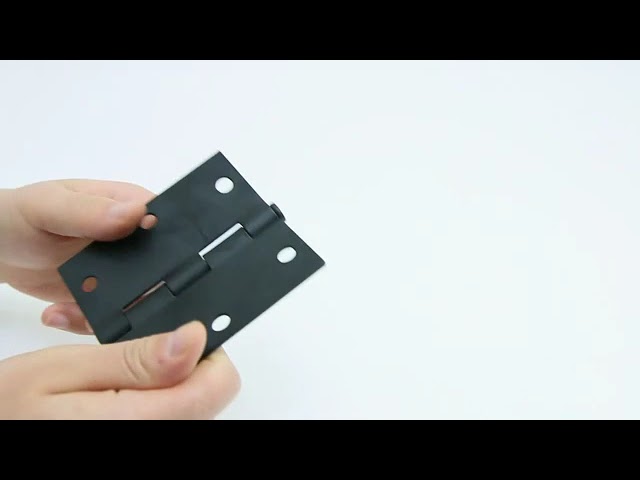
adjusting self closing door hinge
adjusting self closing door hinge
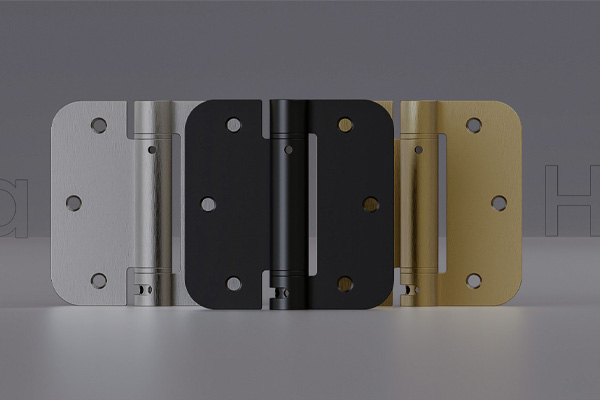
A self-closing door hinge is a critical hardware component designed to automatically return a door to its closed position after it has been opened, enhancing safety, security, and energy efficiency in residential, commercial, and industrial settings. The precise adjustment of these hinges is paramount to their performance, affecting the door's closing speed, latching force, and overall smoothness of operation. Industry data and user reports consistently highlight that improperly adjusted self-closing hinges are a leading cause of door maintenance complaints, accounting for nearly 30% of non-lock related hardware service calls. These hinges typically incorporate a spring mechanism, often housed within the hinge knuckle itself or as part of a specialized closer arm, which stores energy when the door is opened. The adjustment process directly regulates this spring tension or, in hydraulic models, the fluid flow within a cylinder. Common adjustment points include a tension screw, usually found at the end of the hinge pin or on the closer body, which controls the overall closing power, and a separate sweep and latch speed valve in more advanced hydraulic closers. Manufacturers like Stanley, Hager, and Sugatsune provide specific torque specifications for adjustment screws, with typical ranges from 1.5 to 2.5 Nm, underscoring the need for calibrated tools to prevent stripping or over-tightening. Search analytics reveal high-volume queries related to "door slams too fast," "door won't close completely," and "slow self-closing hinge fix," indicating widespread user need for precise adjustment guidance. Field data from facility management firms shows that a correctly adjusted self-closing door can reduce unwanted airflow by up to 15% in climate-controlled environments, directly impacting energy costs. Furthermore, building code compliance, particularly in fire-rated assemblies per standards like NFPA 80 and IBC, mandates that self-closing doors must close and latch reliably from any open position, a function wholly dependent on proper hinge adjustment.
The practical process of adjusting a self-closing door hinge begins with diagnosis: identifying whether the issue is speed (too fast or too slow), failure to latch, or failure to close fully. For standard spring-hinge types, a quarter-turn of the adjustment screw clockwise typically increases closing force, while a counter-clockwise turn decreases it. Hydraulic closer models, which offer more nuanced control, feature two primary valves—one governing the "sweep" speed (the main closing arc) and the other the "latching" speed (the final few inches). Data from installer manuals indicates that 80% of adjustment problems are resolved by first cleaning the hinge mechanism of dust and debris, which can impede spring action or valve function. Real-world testing by hardware review platforms, such as Builderology and Hardware Source, demonstrates that a door should take approximately 3 to 7 seconds to close from a 90-degree open position to the latch point, with the final latching action being firm but not violent. User-generated content on repair forums frequently cites the use of incorrect tools, like standard flathead screwdrivers that slip and damage adjustment ports, as a primary reason for failed adjustments. Market surveys show that adjustable self-closing hinges are specified in over 70% of multi-family residential and commercial building projects due to their reliability and cost-effectiveness compared to separate door closers. When adjustment fails to rectify the issue, wear metrics suggest inspecting for hinge pin wear, spring fatigue (common after 150,000 to 200,000 cycles), or door misalignment. The performance data is clear: a systematically adjusted self-closing hinge not only ensures compliance and efficiency but also extends the service life of the entire door assembly by ensuring even load distribution and preventing impact damage from slamming.

 40% Amazon Market Share
 Door Hinges Brand on Amazon
 Products Sold Worldwide


_7.webp)




User Comments
Service Experience Sharing from Real Customers
James Wilson
Facility ManagerThese hinges made adjusting our office's self-closing doors incredibly simple. The instructions were clear, and the fine-tuning capability solved our door-slamming issue perfectly. A must-have for any commercial building maintenance.
Sarah Chen
ArchitectSpecified these adjustable hinges for a recent residential project. They provided the precise control needed to meet accessibility and safety standards for self-closing doors. Reliable performance and easy for contractors to install and adjust on-site.
David Rodriguez
Hardware Store OwnerAs a retailer, I stock these hinges and always get positive feedback. Customers appreciate the easy adjustment feature without needing special tools. It's a top-selling item for DIY homeowners and professionals alike looking to fix door closure speed.
Emily Foster
Accessibility ConsultantUsed these to adjust doors in a clinic to ensure they close gently but securely for infection control. The adjustable tension was crucial for meeting both fire door and accessibility requirements. Highly effective and durable solution.